How to Build a Trading Routine That Actually Works
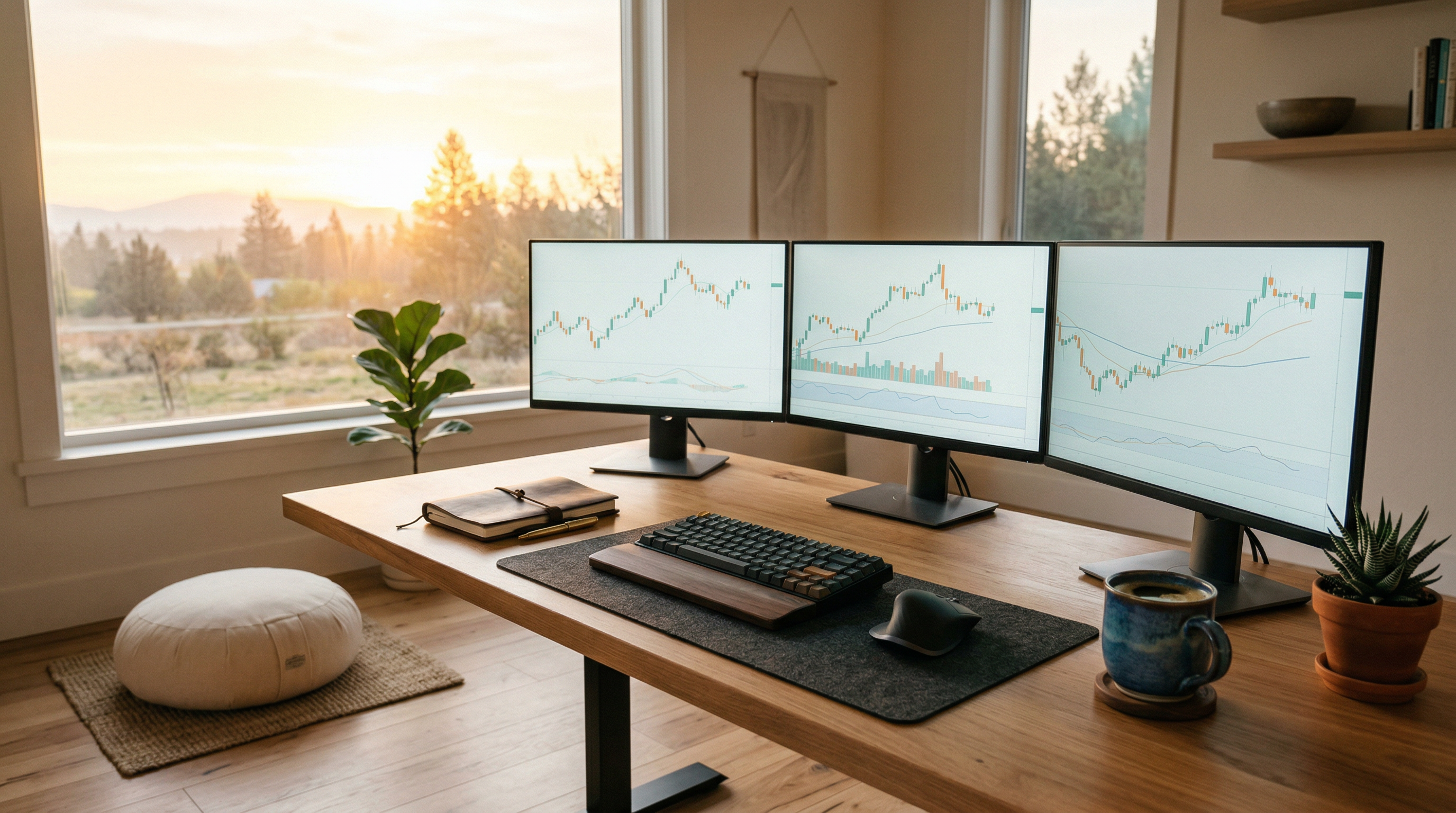
Elite athletes have pre-game routines. Surgeons follow checklists. Pilots run through protocols. Yet most retail traders sit down, open their charts, and wing it. The research is clear: consistent routines dramatically reduce the impact of cognitive biases on trading decisions.
The Science of Routines
Routines work because they shift decision-making from the emotional limbic system to the prefrontal cortex — the brain region responsible for rational, deliberative thought. A study published in Organizational Behavior and Human Decision Processes found that individuals who followed structured decision protocols made 35% fewer biased choices than those who relied on intuition.
The Pre-Trade Checklist
Based on research from trading psychology experts and cognitive behavioral therapy principles, here's a pre-trade routine that works:
The most successful traders combine knowledge with the right tools. Focus on understanding the fundamentals before committing real capital.
Step 1: State Check (2 minutes)
Before looking at any charts or prices, assess your emotional state. Are you anxious? Excited? Frustrated from a previous loss? Rate your emotional equilibrium on a 1-10 scale. If you're below 6, don't trade. Period.
Step 2: Thesis Documentation (5 minutes)
Write down your trade thesis before entering. Include: the specific reason for entry, your target, your stop loss, and the maximum amount you're willing to lose. If you can't articulate these clearly, you're not ready to trade.
Step 3: Devil's Advocate (3 minutes)
Actively argue against your own trade. What would need to be true for this trade to fail? What information might you be ignoring? This structured dissent counteracts confirmation bias.
Step 4: Position Sizing (1 minute)
Calculate your position size based on pre-defined risk parameters — not on how confident you feel. Confidence-based sizing is overconfidence bias in disguise.
The Post-Trade Review
After every trade, win or lose, record: the outcome, whether you followed your system, what emotions you felt during the trade, and what you would do differently. This creates a feedback loop that gradually reprograms your decision-making patterns.
The best traders aren't the smartest. They're the most systematic.
Build Better Trading Habits
Traderise uses behavioral science to help you trade smarter — not just faster.
Try Traderise FreeReady to Start Trading?
Join thousands of traders using Traderise — the platform built for the next generation.
Try Traderise Free →